The proposal to run two university courses has proved to be a very challenging experience. The turning point? Bearing witness to life in the EoC and transforming teaching into a workshop of communion
by Mabih Nji
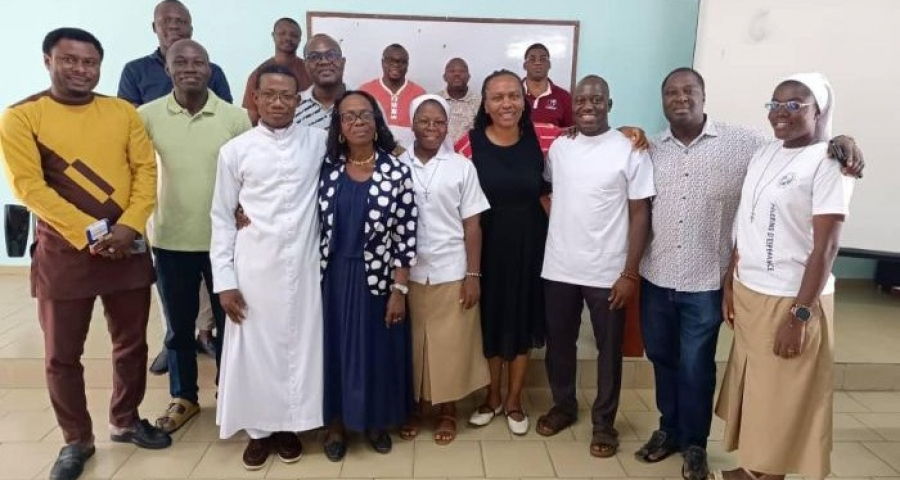
It all began a few months ago, following a conference on the EoC at UCAO (Catholic University of West Africa). I was asked to teach two courses: one on political leadership in the face of humanitarian challenges and the other on political economy and the culture of the gift. I agreed without hesitation, driven by that desire for unity which animates all our initiatives. However, the classroom immediately proved to be a demanding challenge: the participants were all individuals with a solid background in philosophy and theology, ready to question every concept.
 Although I had prepared a meticulous programme, reality forced me to let it go almost immediately. The participants’ questions and resistance were so strong that I was compelled to reshape the course every day. I often felt drained, lacking answers in the face of those who saw my words merely as abstractions. It was a test of genuine inner poverty, but I realised that to touch the hearts of those students I had to accept, first and foremost, that I too was vulnerable and ‘wounded’ by their scepticism.
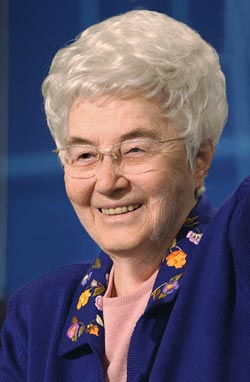
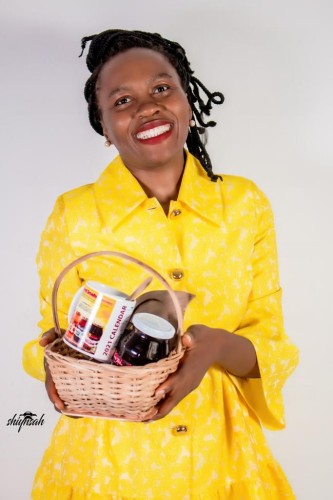
The moment of truth came when we addressed the Economy of Communion and the figure of Chiara Lubich directly. The reactions were extremely harsh: “It’s a utopia”, “These are European ideas imported to deceive people”, or even, “You talk to us about gratuitousness whilst the world is governed by the logic of power and money”. At that moment of peak tension, I realised that no further theories were needed. I put the books aside and presented ChocoMabs, a concrete, African example of an EoC enterprise. At that moment, the atmosphere changed: a deep silence fell and the class chose to continue working for two hours without interruption.
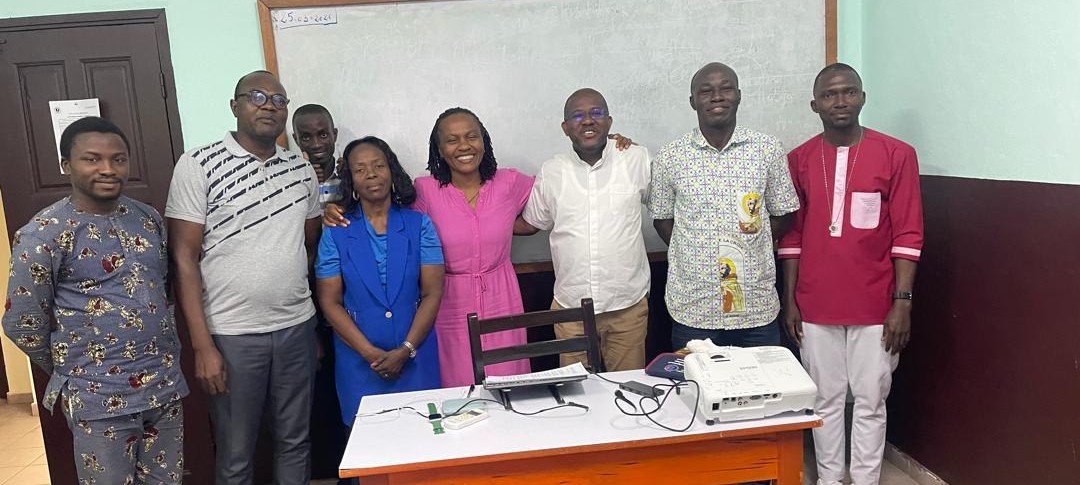
From that turning point, the classroom was no longer just a place of study, but a space of truth and life. We linked the concepts to everyday reality, transforming the initial tension into a shared quest. What had begun as an academic course evolved into a family experience, where the ‘wound’ of encountering the other had become the key to a deeper understanding of human and economic bonds. In the end, even the most sceptical came to embrace me, visibly moved by the journey we had made together.
The impact of the course was clearly evident from the feedback received, which confirmed to me just how important it is to go beyond the lecture hall. One student wrote:
‘I didn’t believe that a course could change the way I see things… I didn’t know that the very values I preach could be translated academically into the world of economics and embodied in daily habits’.
Another highlighted how the teaching approach made them feel valued: “We felt you were a mentor, not just a lecturer”.
This experience taught me that the Economy of Communion is not taught, it is lived. We concluded the 60 hours of lessons with the realisation that every true relationship ‘hurts’ because it forces us to step outside ourselves, but it is the only way to truly circulate the gift. It was not just a university course, but a workshop in communion where we experienced first-hand that unity is possible, even when the wounds of history seem to scream the opposite.