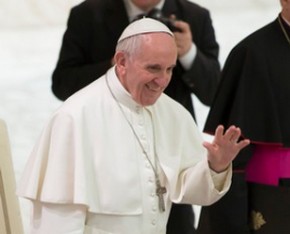
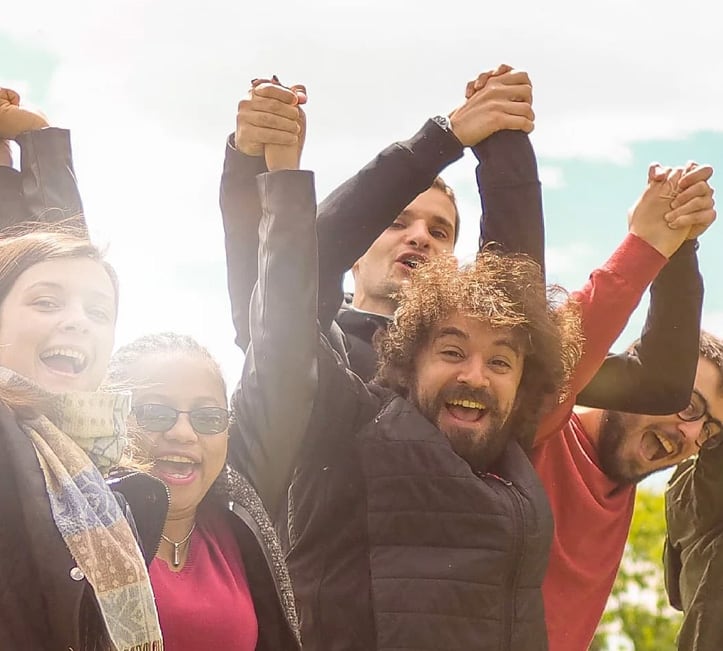
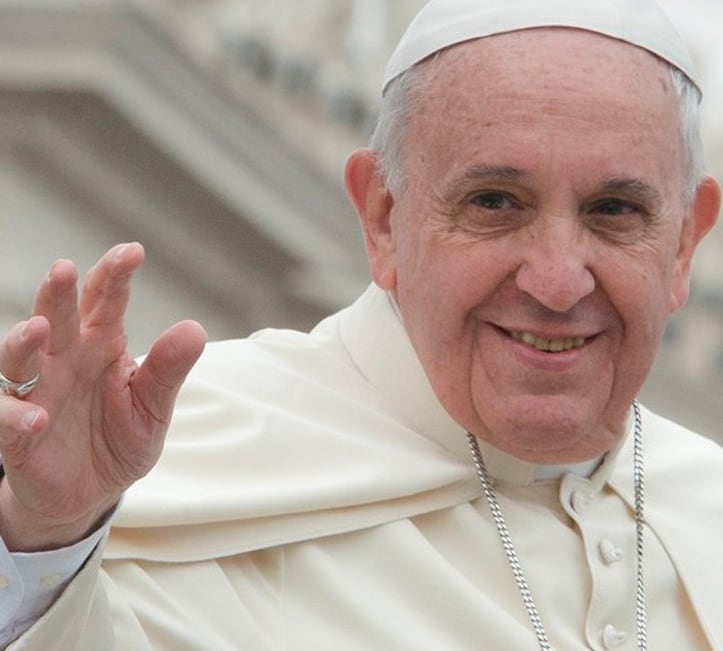
From 19 to 21 November 2020 the city of Assisi will host The Economy of Francis, an international event aimed at young economists, entrepreneurs and change-makers engaged in thinking and practising a different type of economy. The invitation to participate has come directly from Pope Francis, who has today issued a letter in which he invites to the City of St Francis, which is symbol of humanism and fraternity, young economists from all over the world, without distinctions of creed or nationality, to initiate with them a process of global change so that today's and tomorrow's economy is more just, inclusive and sustainable, without leaving anyone behind. The event is organised by a Committee composed of the Diocese of Assisi, Assisi City Council, the Seraphic Institute of Assisi and the Economy of Communion.
The most complex problems in today's world, from safeguarding the environment to justice for the poor, need courageous commitment to rethink the economic paradigms of our time. In the Encyclical Letter Laudato si', the Holy Father recalled that everything is intimately connected and that the Earth is our "common home", and therefore launched an appeal to defend it and all of humanity that inhabits the Earth. He warned us against the careless exploitation of resources and short-sighted policies that look to immediate success without prospects for the long-term. Starting from the example of St Francis, it is therefore necessary to rebuild a new integral ecology, one that is inseparable from the concept of the common good, which must be implemented through choices based on solidarity and the "preferential option for the poor" starting "from solving the structural problems of the world economy."
«Pope Francis' invitation to young economists is an event that marks an historic step forward, because it brings together two of the Pope's key subjects and passions: his priority for young people and his concern for a new type of economy. In his name, we are inviting economists and entrepreneurs who are more sensitive to the spirit of the Oikonomia of Francis (Francis of Assisi and Pope Francis), in order to give young people the best of today's economic thought and practice in the world. The word Oikonomia brings together many realities: the Greek root recalls household management but it also refers to the care of our common home, the OIKOS. We also consider it in reference to Oikonomia as understood by the Fathers of the Church: a theological category of universal salvation. Assisi is an essential part of the event, because it is a city that proclaims a message about a different type of economy. Various venues in Assisi will host parts of the programme, which will be built around the three pillars of Francis' Oikonomia: young people, the environment and the poor», says Prof. Luigino Bruni, Scientific Director of the Committee.
For Pope Francis, the event represents the consolidation of a "pact to change the current economy and give a soul to the economy of tomorrow". It intends to give hope for the rights of future generations, for welcoming life, for social equity, for the dignity of workers and the preservation of our planet. From 26 to 28 March 2020, The Economy of Francis will consist of workshops, artistic events, seminars and plenary sessions with the best known economists and experts in sustainable development and the humanities, who will reflect and work together with young people. In June 2019, applications to participate in the initiative will open.
Full information is available on the website www.francescoeconomy.org
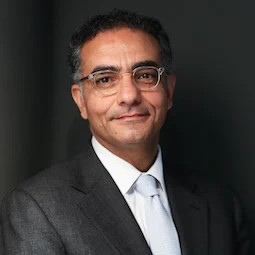 FADI CHEHADÉ is an internet entrepreneur known for founding and selling numerous digital companies and leading IBM’s expansion in the Middle East and Africa. In addition to his significant business achievements, he has held key global roles with a strong social and political impact: he served as President and CEO of ICANN (2012–2016), the international body that governs internet policy, as a member of the UN Secretary-General’s High-Level Panel on Digital Cooperation, and as an advisor to the World Economic Forum. He currently serves as President of the PAX Foundation, an independent organization promoting economic revitalization in the Levant region. Recognized by Harvard and Oxford and named a “Great Immigrant” in 2020 by the Carnegie Corporation, he combines technological innovation with global cooperation and development.
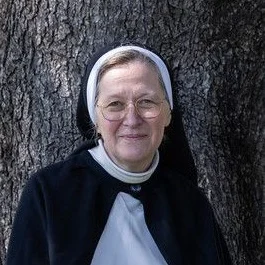 Sr HELEN ALFORD is member of the Congregation of St Catherine of Siena of Newcastle, Natal (Dominicans) since 1994. President of the Pontifical Academy of Social Sciences, Dean of the Faculty of Social Sciences at the Pontifical University of Saint Thomas Aquinas/Angelicum. Se is also Senior Adviser to the “Blueprint for Better Business”, Consultor to the Dicastery for the Promotion of Integral Human Development, Expert of the Holy See’s Agency for the Evaluation and Promotion of Quality in Ecclesiastical Universities and Faculties (AVEPRO). She is a member of the Scientific Committee of EoF.
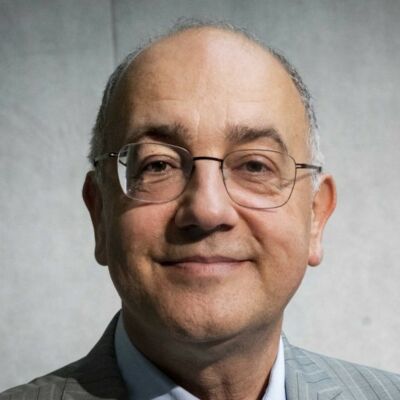 LUIGINO BRUNI is an economist and historian of economic thought whose research interests include philosophy, literature, and biblical studies. At LUMSA University, he is Full Professor of Political Economy and Coordinator of the PhD Program in Civil Economy Sciences. He is also a columnist for Avvenire and President of the Scuola di Economia Civile, which he helped promote and co-found together with Stefano Zamagni. He is Vice President of The Economy of Francesco Foundation.
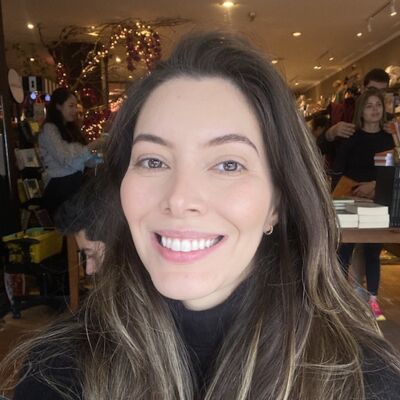 University of Campinas (UNICAMP). Holds a Ph.D. in Economics from UNICAMP, which included a student visiting period at the Scuola Superiore Sant’Anna di Studi Universitari e Perfezionamento in Pisa, funded by the CAPES-PrINT program. Researcher at the Group of Applied Macroeconomics Studies (GEMAP) and the Center for Industrial and Technological Economics (NEIT). Her expertise lies in Industrial Economics and Innovation and Ecological Economics. Additionally, serves as a young member within the assembly of The Economy of Francesco Foundation and the Scientific Committee, a member of the International Society for Ecological Economics (ISEE), and serves on the board of directors of the Brazilian Society for Ecological Economics (ECOECO). She was a Fellow of the EoF Academy and is a member of the Scientific Committee of EoF.