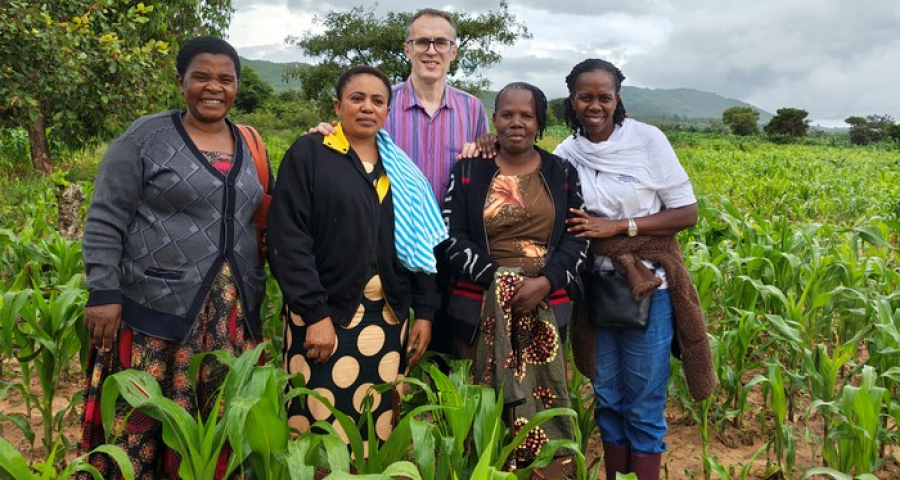
Nicola Giraudo’s EoC testimony in Tanzania: seeds of communion sown in fertile ground
The experience of spreading the Economy of Communion in Tanzania, as lived by Nicola Giraudo, a member of AIPEC and employee of Bertola srl in Marene (Italy), stems from a personal desire to serve others. “Every day, even at work, I try to help those in need,” he says, recalling how this attitude also guided his travels with the Consolata missions from Turin to Mongolia in 2024 and to Tanzania in September 2025. It was in Tanzania, in Iringa, that the first contact was made, sparking the experience we are sharing today.
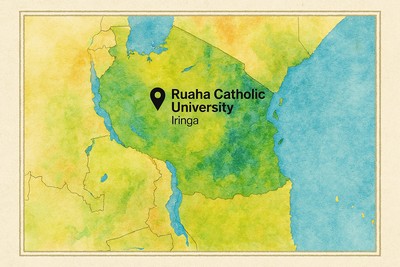 During that stay, in fact, Nicola Giraudo met Professor Florence Nakawunde, a faculty member at Ruaha Catholic University (RUCU) who had long been eager to promote initiatives related to the Economy of Communion. “I hadn’t yet found anyone who believed in it as much as I do,” she confided to him. The collaboration grew stronger when the professor introduced him to Alex Juma Ochumbo, one of the university’s top administrators, with whom “a wonderful relationship” developed, based on mutual respect and a shared desire to offer students an economic perspective rooted in the principles of fraternity and community responsibility.
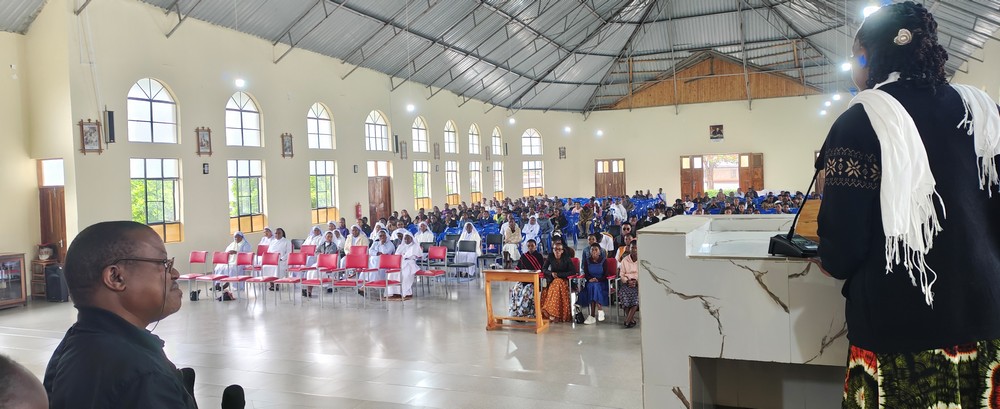
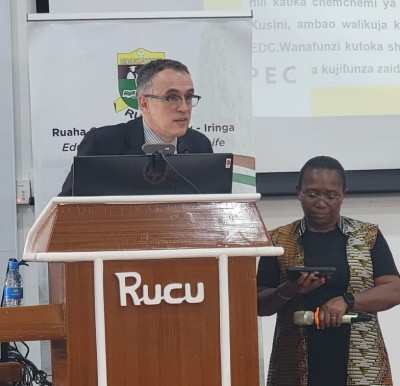
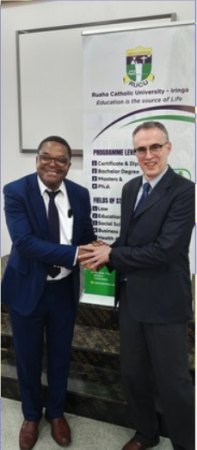 In the months following the meeting, RUCU’s leadership decided to organize a training program dedicated to the Economy of Communion, structured into two mornings of lectures aimed at six classes of students, as an alternative to a traditional approach to political economy. Giraudo was invited to speak, sharing real-life cases, business experiences, and the practical application of the “Guidelines for Running an EoC Business” during the Public Lecture co-organized with the Focolare Movement, titled: “A New Way to Live Capitalism.” Professor Castor Mfugale of the Catholic University of Mbeya, an expert in business administration and a supporter of the Economy of Communion, also participates in the initiative, helping to lend academic credibility to the program.
On February 23 and 24, 2026, the activities will involve a total of approximately 1,000 students, including those attending the presentation offered during the celebration in the university chapel. Feedback gathered through a final quiz highlights the interest generated: many students acknowledge that “EDC businesses generate profits like others, but allocate them differently, for the good of the community.” Assisting Giraudo with communication is translator and Focolare member Jenifer Mpunza, head of the Iringa Focolare, who facilitates the dialogue from Italian to Swahili.
 The visit extends beyond the academic sphere to reach the local community. Thanks to the commitment of the men’s and women’s focolares in Iringa, the Economy of Communion is presented to local families and the Consolata Missionaries, who express a desire to explore its principles further.
Some initiatives emerge immediately: a family offers a plot of land for growing corn according to the principles of the Economy of Communion, with a special focus on the most vulnerable families, while a professor at RUCU expresses his intention to launch a new business inspired by the Economy of Communion model.
The experience concludes in an atmosphere of trust and openness toward the future. “I thank the Lord for making me an instrument in His hands,” says Nicola Giraudo, grateful for the support received also from his company Bertola Srl, which contributed to the travel expenses. The signs that have emerged confirm that Tanzania, along with neighboring countries such as Kenya and Uganda, represents fertile ground for the Economy of Communion, capable of generating concrete initiatives and lasting relationships. “The multiplication of gifts continues,” concludes Nicola Giraudo, referring to the network of solidarity and collaboration that spontaneously emerged during these weeks of shared work.