EoC - Economy of Communion

notiziario EdCEoC magazine

Economy of Communion

A new culture

Magazine edited by Alberto Ferrucci

A four-monthly periodical conceived to connect all those who adhere to the project launched by Chiara Lubich for an economy of communion in freedom.
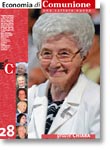
notiziario-edc-28 It is an economy for people who find self-fulfilment in relationships with others rather than in rational egoism. It is an economy based on a ‘commitment to grow together’, rather than on a struggle to dominate, being willing to risk economic resources, inventiveness, and talents in order to share the Gospel’s culture of giving.

This culture of giving is proving to be more and more fundamental in directing humanity of the twenty-first century in its search for new ways to face the environmental challenge and to avert new atrocities among men caused by economic globalization.

Download printable version of EoC N.32 in PDF

Other issues are available for download at: PDF Files/EoC Magazine (PDF archivo, from N.25 until current issue)

see also: online papers/EoC magazine

Issues before N.25 can be downloaded at: http://tesi.ecodicom.net/notiziario.phplink.gif

A collection of the most significant articles of the first ten years (twenty issues) of the Newsletter "Economy of Communion - a new culture" (from 1994 to 2004) are in the first issue N.1 of "Economy of Communion Notebooks", also available online (in Italian).


Experiences of Communion in the Democratic Republic of Congo

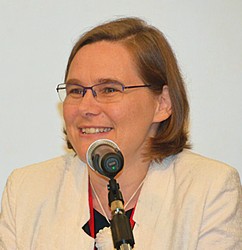
by Emanuela Maria Cavaleri*

Emanuela_Cavaleri_rid

From “Economy of Communion – a New Culture” n.35 – Edition, insert attachment in Citta` Nuova  11 – 2012 – June 2012

EoC is not a foreign term, especially in certain areas in Africa.  In the Congo, which to the constant political turbulence is added the difficult economic situation (in 2011, the Congo occupied the last place in the UN’s human development index, with a medium annual gross income per capita of $280 U.S.),  the Economy of Communion had already arrived in 1991. Furthermore, at that time there was no clear understanding of the new economic model which this project proposed, especially on how to implement it, explained Corneille Kibimbwa, one of the local leaders of the EoC.  The proposals that were put forward to create new businesses had a hard time transforming themselves into reality, especially due to lack of finances.

Nevertheless, the EoC Pan-African School in Nairobi last January 2011 had constituted a new start:  a new desire to discover the proposal of the Economy of Communion which has given new impulse to entrepreneurial initiative.

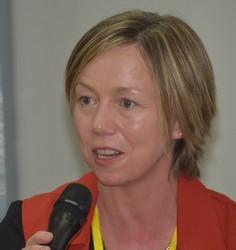
by Catherine Sallier

Catherine_Sallier_rid

From “Economy of Communion – a New Culture” n. 35 -  insert attached to Citta` Nuova n. 11 – 2012 – June 2012

I have been a professional beekeeper for 30 years in the Ardeche province of France.  From my bees I gather honey and pollen, and a less known product called ‘propolis.’   In the beginning of spring, Celine, a young colleague, contacted me telling me in a forlorn way that she had lost all her bees during the winter, and asked me if I could give her ten colonies to be able to produce some propolis.  It was a very difficult request, because propolis is a very rare and costly product obtained from particular bee swarms  which need a great amount of technical work and must be looked after in a special way, but a small number of colonies is enough to make some profit.

A novelty that comes from afar

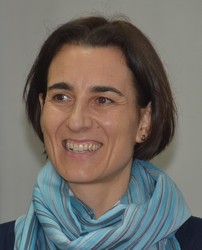
by Paolo Loriga

 from the "Economy of Communion - A New Culture" n.33 – editorial insert attached to Città Nuova n.13/14 - 2011 - July 2011

PaoloLorigaWelcome aboard! The publication you have in your hands is a new editorial adventure, even if it moves in close continuity with the route taken by the Economy of Communion magazine. To date, it has been designed and built within the team of the EoC experts, who - with many night hours and expertise of an external graphics – managed, for 17 years, to carry through (based in Genoa) each issue in a commendable way.

The novelty now is that handful of people on their feet have developed with us the prospect of "going out" together with Città Nuova magazine. It is not a marriage, nor a couple. If anything, it is of two friends going out together, making treasure - in the spirit of unity that pervades both publications – of their respective typical characteristics and gaining ulterior benefits.

The Great Attraction of Modern Times

 from the "Economy of Communion - A New Culture" n.33 – editorial insert attached to Città Nuova n.13/14 - 2011 - July 2011

"This is the great attraction
of modern times;
to penetrate to the highest contemplation
while mingling with everyone,
one person alongside others.
I would say even more:
to lose oneself in the crowd
in order to fill it with the divine,
like a piece of bread
dipped in wine.
I would say even more:
made sharers of God's plans
for humanity,
to embroider patterns of light on the crowd,
and at the same time to share with our neighbor
shame, hunger, troubles, brief joys.
Because the attraction
of our times, as of all times,
is the highest conceivable expression
of the human and the divine,
Jesus and Mary:
the Word of God, a carpenter’s son;
the Seat of Wisdom, a mother at home."

Chiara Lubich (Meditations)

Fraternal relationships as a means to a sustainable future.

The first 20 years of a clear economic alternative

by Alberto Ferrucci

 from the "Economy of Communion - A New Culture" n.33 – editorial insert attached to Città Nuova n.13/14 - 2011 - July 2011

Alberto_FerrucciAs her plane was waiting to land in Sao Paulo, Brazil, in 1991, Focolare founder Chiara Lubich saw a carpet of slums surrounding a forest of skyscrapers. She asked God, confident in the power of prayer, for a “third avenue of economy” that could offer, in the ruins of Marxism and the injustices of the free market economy, a sustainable future for humanity in the third millennium. 

This “third way” is based on the knowledge that human beings are not moved only by personal interest, but also by the profound need for overcoming one’s self-interest that results in building fraternal relationships.

Twenty years ago, trusting in God and in the Brazilian people’s generosity and ability to dream, Chiara launched the Economy of Communion in Freedom, an economic initiative that applies the logic of heaven — mutual love — to human relationships.

More innovation, more creativity, and that entrepreneurial spirit

The EoC outlook for 2031

by Luigino Bruni

 from the "Economy of Communion - A New Culture" n.33 – editorial insert attached to Città Nuova n.13/14 - 2011 - July 2011

110528_Ginetta_BruniWhat are the challenges we have to face and overcome in the next 20 years (and beyond) if we want the Economy of Communion to continue and to be faithful to its calling?

First, a challenge concerning the EoC companies: these past 20 years we have understood despite many mistakes that the EoC’s main contribution to alleviate extreme poverty, thus building an economy and world of communion, will not occur primarily by redistributing wealth (taking money and resources from the “rich” to give to the “poor”); rather, its contribution will lie in creating new wealth while including in the process people in difficulty and who are disadvantaged (creating new “cakes,” not just re-cutting the “slices” of a given cake differently).

This inclusion is important because if those receiving benefits from the created wealth do not participate in the production process in some visible and tangible way, the aid they receive is likely to evolve into a paternalistic welfare approach. When Chiara launched the EoC in Brazil she said, “We have to create new businesses,” not “We need to convert business people to be more generous and giving.”

From the risk of delinquency to the risk of business. Young people at an expanding purse business in Brazil

From the street to the market

by Paolo Lòriga

 from the "Economy of Communion - A New Culture" n.33 – editorial insert attached to Città Nuova n.13/14 - 2011 - July 2011

110408_Dalla_Strada__inaug_07It was not located in the busiest part of the expo of 650 participants of the Economy of Communion Assembly, but it was the most crowded stand during the breaks. They sell purses, jackets, and women's clothing. Everyone can see the success they had in attracting visitors (which also seem to be customers).

The lines of artisan products are a mix of quality and modern design, with nice original touches, just as is the origin of the raw materials used: tarps from trucks that are no longer in use, scraps of leather and jeans that would not be used in any other way, used out of ecological consciousness. But these are not the only typical characteristic of this young business.

Companies with ideal motives

Is the Economy of Communion just business with a social conscience? Turns out it’s much more.

by Luca Crivelli

from the "Economy of Communion - A New Culture" n.33 – editorial insert attached to Città Nuova n.13/14 - 2011 - July 2011

crivelliThere are three types of companies that transcend traditional business principles, organizations that have what we might call “ideal motives.”

A first group consists of companies whose business serves to solve, in an indirect manner, social problems: for example, social entrepreneurship initiatives created to finance non-profit organizations. Their ideal goal is to partially or totally donate the profit earned in the market place. As such, their ideal goal becomes concrete only in retrospect when the profits are donated and then contribute to maintaining entities that operate beyond the market.

Another circle includes companies that are created to contribute directly and solve social ills: those companies working for the benefit of disadvantaged people. Examples of this type include Muhammad Yunus’ Grameen Bank and the subsequent development of so-called microcredit institutions. These institutions, along with the Grameen Bank and other multinational companies, are involved in launching activities designed to meet the needs of vulnerable people and to accomplish this task at the lowest possible price.

Poverty and development: an African perspective

by Paolo Lòriga

from the "Economy of Communion - A New Culture" n.33 – editorial insert attached to Città Nuova n.13/14 - 2011 - July 2011

PaoloLoriga

Once again, Africa has much to teach us — in a subtle way that typically leaves us Westerners bewildered and embarrassed because we lack certain cultural categories and shared definitive concepts. Take development and poverty, for example. These two issues were addressed by the Central African Republic’s Genevieve Sanz, an economics expert who made valuable contributions during the International Assembly of the Economy of Communion at Mariapolis Ginetta on the outskirts of Sao Paulo, Brazil, from May 25–28.

The distinction inherited from the opposition between ‘civilized’ and ‘uncivilized’ was based on a Western assumption,” began Professor Sanz, immediately indicating one of the original sins of the cultural phenomenon of poverty. Since then, the theory of underdevelopment has experienced growing support, and developing countries have accepted this premise seeking the means to develop it further.

Five New EoC Theses

by Antonella Ferrucci

from the "Economy of Communion - A New Culture" n.33 – editorial insert attached to Città Nuova n.13/14 - 2011 - July 2011

n28_pag._11_antonella_ferrucciThe first thesis on the Economy of Communion dates back to June 1992, just one year after the project was launched. In fact in 1991, Chiara Lubich entrusted the EoC’s “cultural enrichment” to the youth, inviting them to “use their energy for this program” and make the EoC’s experience of life a “theory” that could spread in the economic, theological, sociological and philosophical sectors.

Since then and with great generosity, hundreds of young people have embarked on this adventure, risking something as important as their theses and dissertations in various fields of study. It is largely due to them, especially in the early years, that the ideas of the EoC spread in academia around the world.

An electronic archive, started in 1994, today lists over 300 theses on the EoC. Written in 14 different languages, they come from all the continents. Here are some recently posted additions that can be found at ecodicom.net.


Page 1 of 10

EdC newsletter


Receive HTML?

Site de l'ÉdeC en français

Edc_France_mod

Le site officiel de l'ÉdeC est en ligne:
economie-de-communion.fr

EoC 2011-2012 Report

Report 2012 mod

New data on businesses, culture of communion, the poor and future prospects.

Download the report

Find us on:

facebook-logotwitter-logoLogo_vimeo_rid_mod

Video - EoC in 5 words

video Eoc 5 words mod

Presentation by Luigino Bruni to the Faculty of the Ateneo De Manila University. Manila, Philippines, September 23, 2011

Guidelines for conducting an EoC business

Binari_rid_modThe Economy of Communion proposes the following "Guidelines for conducting a business", to productive organizations who adhere to its message and its culture, written in the light of the life and thought of thousands of entrepreneurs and workers....

The economy of giving

Chiara_Lubich_1Chiara Lubich

«Unlike the consumerist economy, based on a culture of having, the economy of communion is the economy of giving.... 

RSS Syndicator

Who´s online

We have 210 guests and no members online