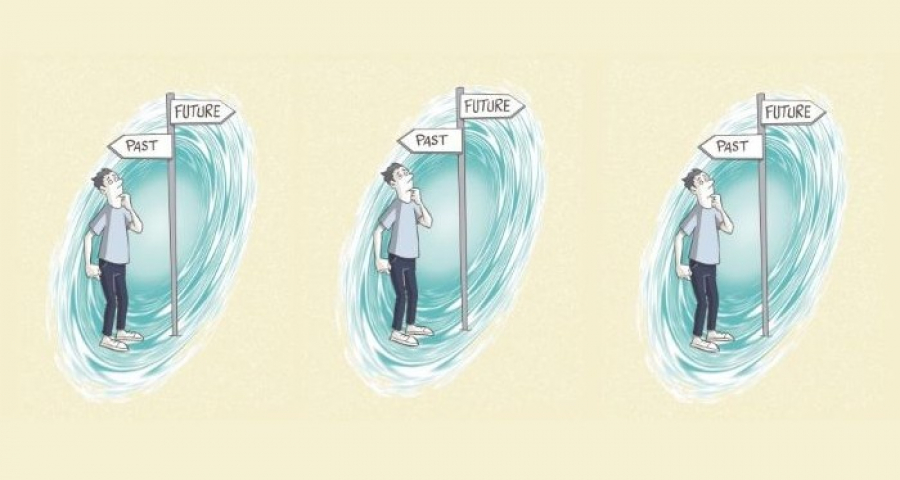
The so-called fixed-cost syndrome is the mistake made by those who allow themselves to be influenced in their current decisions by the costs incurred in the past. But it is tomorrow’s promised land that gives meaning to the present, not regret for the onions of Egypt.
by Luigino Bruni
published in the Messaggero di Sant'Antonio on July 3, 2026
One of the fundamental economic principles is the so-called fixed-cost syndrome. It is the very common mistake of those who allow their current decisions to be influenced by costs incurred in the past. Let’s take a simplified example: suppose a company purchased machinery years ago because it intended to launch a new product line (e.g., in the apparel textile industry).
Shortly afterward, it becomes clear that the investment isn’t yielding the hoped-for results, and that machinery begins to become a problem. To some, it becomes obvious that they need to put yesterday’s costs behind them and focus on today—and thus on tomorrow—but the owner cannot bring himself to accept that loss and therefore to admit his mistake. And so he begins to imagine new uses for those same machines, in an effort to at least try to mitigate the hardship caused by that wrong choice. Energy and more money are spent trying to revive that stillborn operation, while the other production lines begin to suffer because many people are diverted from their regular work in the hope of reusing, repurposing, or fixing those old machines.
What, then, would be the right choice? To come to terms with the money spent yesterday and the investment that went bad—which are now gone—and prevent that mistake from continuing to cause damage today. Unfortunately, this syndrome is very common in the daily decisions of many people, every single day. Let’s consider, for another example, a nun who has lived in a convent for thirty years. She entered at age 20, and is now 50. Having reached maturity, as her life has evolved, she realizes she made the wrong choice initially—“I shouldn’t have entered the convent. I was foolish, and even more so were those who advised me to enter.” She begins to think she needs to change her life, but the “cost incurred”—or the investment of thirty years of her existence—becomes yet another obstacle: “So should I just throw away thirty years of my life?” And so, in order not to throw away her past life—which is now gone anyway—she continues to throw away the years she has left, allowing the past to devour her present.
I’m not saying—that would be absurd—that all people (nuns, husbands, wives, friars…) who find themselves in a major crisis and are thinking of leaving must do so as the only solution. There are many ways to resolve these crises; some can be overcome by remaining in the convent, in the family, and in one’s long-standing community. The reason for staying, however, must not be a reluctance to throw away past investments, because in such cases one continues to throw away both the present and the future, living in anger and bitterness toward life, toward oneself, toward others, and even toward God. The reason for staying must always be sought in the present and the future, in a renewed choice of the very same life as yesterday, because it must be clear that it is the future that gives meaning to the present, not regret or remorse for the past. The situation is different for those who stay out of a mysterious loyalty to themselves, which becomes more important than their own happiness: but in these cases, everything revolves around the present and the future. It is tomorrow’s promised land that gives meaning to the present, not regret for the onions of Egypt.
Photo Credit: © Fabiano Fiorin / MSA Archive