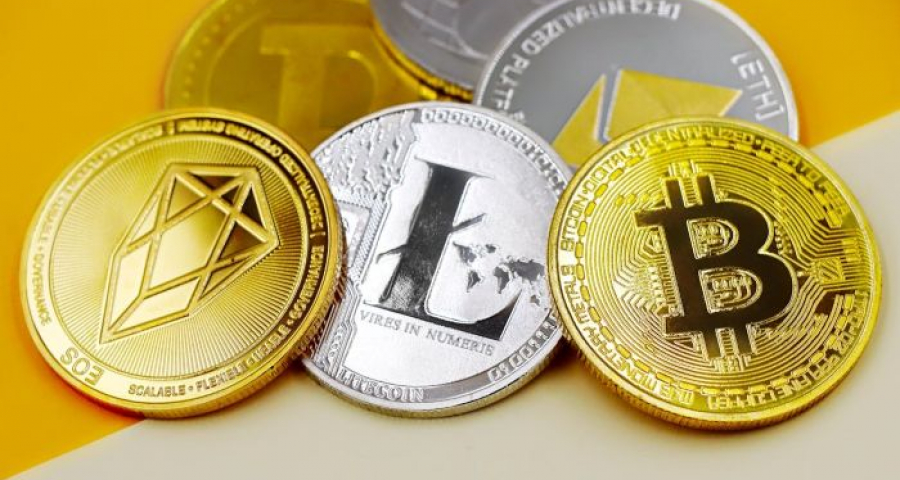
Few realize it: today anyone can create a currency, but only those who inspire trust can make it accepted as if it were a dollar. A currency that, thanks to cryptocurrency algorithms, can be used anywhere, bypassing bureaucracy and controls, but undermining the financial system
by Alberto Ferrucci
published on Città Nuova on 04/27/2026
Cryptocurrencies—Bitcoin (BTC), Ethereum (ETH), and Binance Coin (BNB)—are digital tools that allow value to be transferred without going through banks or intermediaries, but with a clear flaw: their price can fluctuate wildly. This is why Stablecoins were created—digital currencies “pegged” to the value of the dollar: the most widespread is Tether (USDT), launched by an Italian entrepreneur, and others, most recently joined by USD1 from the company WLFI, which is close to President Trump’s family.
Not all stablecoins are the same: some are backed by real reserves, while others rely on much riskier algorithmic mechanisms.
Stablecoins allow you to move money quickly, globally, and with fewer rules than the traditional banking system. Those who use them want to be able to transfer dollars in seconds and anywhere within cryptocurrency markets. Transactions are traceable, but the identities of the parties involved are not always known.
When you buy a stablecoin, you hand over real dollars to a private company with access to the banking system and initial capital and/or other elements to inspire trust: a company that promises to hold them, investing them in safe assets, government bonds, or interest-bearing deposits.
All this interest accrues to the issuer of the currency, the “token,”which commits to returning its value in dollars (“burning the token”) upon simple request.
In practice, most tokens remain in circulation without being redeemed.
Since they are not banks, token-issuing companies are not subject to the oversight imposed on traditional financial institutions, and are subject to rules that are still incomplete.
With considerable leeway, they operate in the financial market with fewer constraints than traditional banks: a freedom that inevitably opens the door to risky behavior.
An issuer may decide to invest part of its reserves in assets that yield higher returns but are less secure: corporate bonds, complex instruments, or even cryptocurrencies, and as long as the market rises, no one notices.
But if an investment goes south, the real value of the reserves can fall below that of the tokens in circulation, and if the news comes to light and confidence collapses, a run on redemptions ensues, just like at the teller windows of a bank with no liquidity: in this case, however, there is no public banking system behind it ready to come to the rescue.
Unfortunately, it won’t just be those who bought the stablecoins who lose out: a potential insolvency of Tether—which holds over $120 billion in U.S. Treasury securities—if suddenly all called for redemption, would cause a market shock.
This would significantly erode the value of the securities which, through their holding, also guarantee the solvency of banks and other financial institutions, amplifying market tensions, with more severe effects during times of greater fragility.
Stablecoins were created to provide stability where currency volatility is the norm, as in many developing countries, by offering the ability to conduct transactions in dollars: but this stability comes at a hidden cost, because it allows private companies to act like banks without being regulated as such.
The situation worsens if a non-transparent issuer creates stablecoins that are not fully backed, uses them to speculate by buying Bitcoin during a bull run to resell them and obtain real dollars to replenish reserves: a debated hypothesis is whether this becomes a covert way to generate money out of thin air by exploiting user trust.
As long as international regulation remains as weak as it is today, with even the banking system opening up to stablecoins, the security they promise will depend more on blind trust than on real guarantees.
In such an exposed system, a single mistake is enough to turn a “stable” digital dollar into a systemic trigger.
Photo credits: Photo by Marta Branco on Pexels