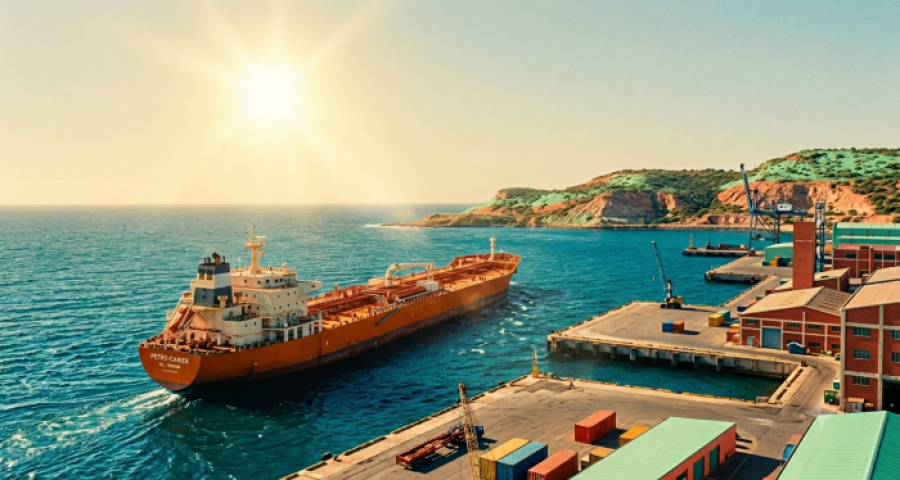
The United Arab Emirates is considering a gradual withdrawal from OPEC to free itself from production quotas and strengthen its strategic autonomy vis-à-vis Saudi Arabia and Iran.
by Alberto Ferrucci
published in Città Nuova on May 19, 2026
The move risks reshaping the global energy balance, with implications for oil prices, the stability of OPEC+, and U.S. production of shale oil
In recent months, the United Arab Emirates has distanced itself from OPEC, creating a rift that until a few years ago would have seemed almost unthinkable within the world’s leading oil cartel. Officially, Abu Dhabi continues to speak of “sovereign choices”, greater production freedom, and national economic needs, but much deeper geopolitical motivations are emerging, and among these, the growing confrontation with Iran may also play an important role. The Emirates are still part of the same oil cartel as Iran, but strategically they view Tehran as a direct threat.
Ballistic missiles, drones, and Iranian-backed paramilitary networks have increased the vulnerability of the Gulf monarchies, as demonstrated by the attacks on Saudi energy infrastructure and the war in Yemen.
In this context, Iran’s presence in the very body that is supposed to coordinate producers’ energy policy appears increasingly paradoxical, and the issue of Iranian missiles could also serve as a useful political justification for distancing itself from OPEC. From a communications standpoint, it is much easier to explain to Western allies a distancing from an organization shared with a country perceived as hostile, rather than presenting the choice as a simple clash of economic interests, particularly with Riyadh. The Iranian threat thus offers Abu Dhabi a strategic narrative that can be leveraged on the international stage.
The economic explanation is certainly real. The Emirates have invested enormous capital to increase their extraction capacity and wish to quickly monetize their oil reserves at a time when the global energy transition could reduce the strategic value of hydrocarbons in the long term. From the Emirati perspective, remaining bound by OPEC production quotas means limiting the return on these investments.
Continuing to cut production to artificially prop up crude oil prices benefits Saudi Arabia, which is committed to financing the massive Vision 2030 program promoted by Prince Mohammed bin Salman, and the United States, which is ramping up its oil production through fracking.
But the economic dimension alone is not enough to explain the gradual hardening of relations within the cartel. In recent years, Abu Dhabi has developed an increasingly autonomous foreign policy, seeking to present itself as an independent regional power capable of navigating simultaneously among the United States, China, Russia, and India. The Emirates have developed a central role in international logistics, finance, and energy infrastructure, transforming themselves into a sort of global hub between Asia, Africa, and Europe. In this context, the idea of remaining subordinate to the strategic decisions of others appears increasingly incompatible with the country’s ambitions.
The UAE’s exit significantly weakens OPEC+, the system built in recent years alongside Russia that had restored the cartel’s strong ability to influence global oil prices through coordinated production cuts. The UAE is, in fact, the group’s third-largest producer, and its exit risks undermining the organization’s internal discipline. Behind this development lies a broader transformation of the Gulf. The Emirates no longer wish to be merely a disciplined oil monarchy within a regional system led by Saudi Arabia. They want to become an autonomous global actor, capable of using oil as a financial and geopolitical tool without being subject to the constraints imposed by other producers. From this perspective, OPEC appears less and less as a guarantee of stability and increasingly as a constraint on the country’s strategic freedom.
The most immediate consequence, once the current problem of the Strait of Hormuz blockade is resolved, will likely be an increase in the supply of crude oil on the market. Abu Dhabi could produce more oil than is currently allowed by OPEC quotas, helping to lower the international price per barrel. This would represent a benefit for consumers and industries, but could also have a less obvious environmental effect. Lower prices would in fact make U.S. fracking less profitable, an extraction technology that is much more expensive than conventional Gulf oil.
Today, many new U.S. drilling projects using fracking are economically viable only at prices above about $60 per barrel, while below $50–55, most of the less productive projects lose their economic viability. A slowdown in fracking could reduce methane emissions, considered one of the most critical aspects of U.S. “shale oil”. Paradoxically, therefore, more conventional Emirati oil on the market could curb one of the forms of extraction most contested today from a climate perspective.