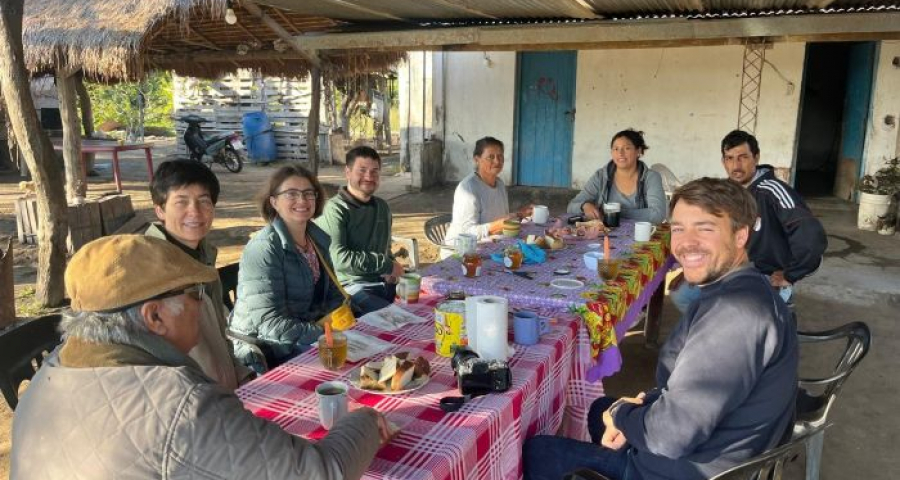
Encounter, celebration, and commitment: three words that sum up the 35th anniversary of the Economy of Communion, celebrated from May 25 to 30. Here is a report on the first phase of the event
by Cibele Lana
About 500 people participated in a program divided into two phases. In the first phase, participants experienced an immersive journey through 16 Latin American communities and businesses that put the culture of communion into practice. In the second phase, they gathered in Buenos Aires, Argentina, for an international forum dedicated to celebrating the journey of the EoC and building commitments for the future.
The central theme of the celebrations was “Paths of Regeneration,” focusing on the essence of the EoC: to regenerate the wounds of the current economic system from the inside out, entering into the hearts of those who suffer daily to envision a different economy together with them.
«We dare to say that the most powerful tool for regeneration is communion,” stated Isaías Hernando, international co-responsible for the EoC».
 Communion, therefore, as a catalyst for regeneration, shifts the focus away from poverty alone and highlights social, cultural, and spiritual riches.
This is why, to celebrate this journey of regeneration over time, we chose to begin precisely with the wounds of society.
Sixteen initiatives in three Latin American countries hosted the first part of this celebration. In each location, communities of people who live this reality daily and members of the Economy of Communion—who seek to address these needs through various projects and activities—opened their doors so that participants in the 35th-anniversary event could experience a firsthand immersion in these initiatives.
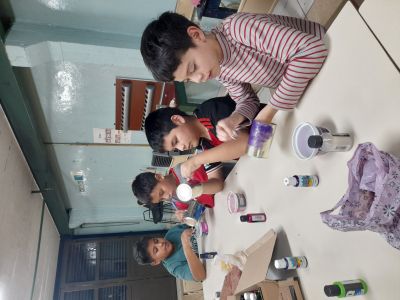 Each reveals a pain, a lack, but also great hope, a journey of building bonds, of gifts put at the service of others, and the desire of many to transform reality together. Through group activities, guided tours, participatory dynamics, and moments of dialogue, each person was able to listen, welcome the reality of the other, touch it, understand it, express it, and share it.
This was precisely the experience described by participants in the first phase, divided into small groups across the sixteen local Latin American initiatives of the EoC.
“I participated in the experience at the Nuevo Sol Centers. What struck me most was not the poverty nor the chasm of inequality that exists in the outskirts of Buenos Aires, but rather the strength with which love weaves community in this region. The challenges are greater, which is why love is more concrete, more active, and closer,” said Luz Villafañe, an Argentine from Tucumán.
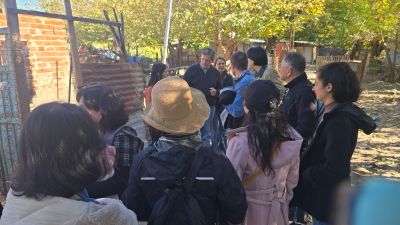
In Buenos Aires, in the Lincoln neighborhood, another experience offered was a self-build housing program for vulnerable families, in which the families themselves participated in building their homes. Regarding this experience, Veronika, a Slovak, said: “For me, this experience meant opening our hearts and minds to 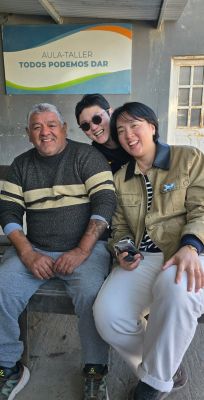 communion with so many wonderful people—in the workshops, sharing meals, sharing our dreams, and listening to one another.”
And Antonela, from Argentina, says: “More than the physical work, what was evident was an organized, supported, and committed community working for the dignity of every person.”.
In Volcadero, the local community generates its own income from a landfill. Children, young people, adults, and the elderly face the unsanitary conditions of the place to survive. But even there, communion leaves its marks of regeneration. The EoC company DIMACO works alongside the community, sharing resources, training, and bricks to improve homes. Marilen, from South Korea, told us:
“Seeing those solid Dimaco bricks joined to the original houses, now almost in ruins, I felt that true love does not seek to destroy the other nor to change them by force. What I and all of us can do is stand by people so that poverty does not turn into isolation: I felt once again that this is true solidarity”
Sixteen different communities where, from May 25 to 27, a shared experience unfolded: that of a vibrant and profound encounter that fostered communion among the participants and the communities hosting them. This communion was decidedly palpable during the second part of the event, even for those participating remotely. We’ll tell you more.