#OPLAStories - Juan Diego's story clearly highlights how investing in relationships can generate responsibility, competence, and solidarity, for a society in which no one is left behind.
by Tainã Santana
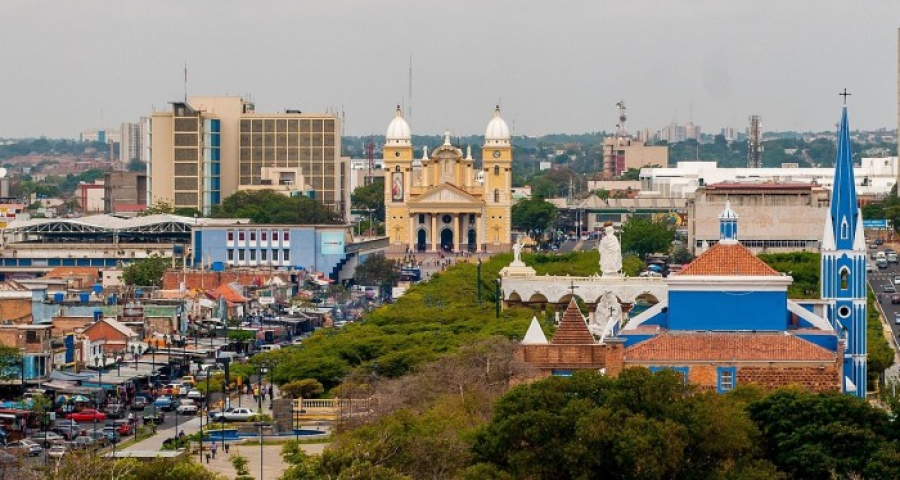
We are in Maracaibo, in northwestern Venezuela. Once the oil-producing heartland overlooking Lake Maracaibo, today it suffers from declining energy production, high inflation, and unstable public services. Scarce formal employment, intermittent electricity, and difficulty accessing food and healthcare mark the daily lives of many families. Migration has emptied neighborhoods and separated families, often leaving teenagers to shoulder adult responsibilities. On the political front, national tensions, even at the local level, are fueling uncertainty. In this context, vulnerability does not only mean a lack of income, but also fragile relationships and opportunities. Yet, community networks and daily communion continue to preserve human dignity.
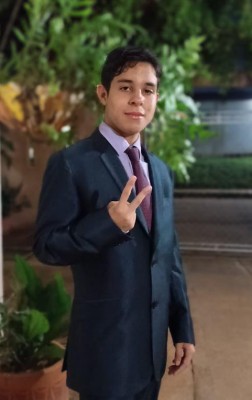 At 16, a boy from Maracaibo is about to graduate and looks to the future with determination. Here, where oil has represented the promise of development for decades and today coexists with precariousness and migration, studying is not a given: it is a daily choice of resistance and hope.
"I'm Juan Diego and I'm in my last year of high school. In July, I will graduate and be able to go to university.“ His words have the simplicity of someone who knows that every achievement is the result of sacrifice. ”I was worried that I would not be able to continue studying for financial reasons." In many families in his city, incomes are unstable, public services are irregular, and opportunities are limited. Education then becomes a fragile bridge between the present and the future.
Thanks to the work of the team of operators in Venezuela, the support received through the Economy of Communion made a difference. “I was able to pay part of my high school expenses and continue my studies. I thank you for the investment you made in me.” He is not only talking about financial help, but also about trust: someone believed in his abilities when the risk was to stop.
“I am a student who finds it easy to study and understand things. I like everything to do with numbers.” His dream is to study petroleum or gas engineering, to contribute in a competent and innovative way to a sector that, despite the difficulties, remains central to the future of the country. In a territory where natural resources have marked history, he wants to transform knowledge into responsibility.
But what is striking is what goes beyond professional ambition. “I really enjoy helping people, especially my classmates.” Last year, he found out that a friend had failed two subjects. “When I heard about it, I decided to help him so that he could pass the school year.” Afternoons of shared study, repeated exercises, patient explanations. “In the end, he passed both subjects, and now we are classmates, and he thanks me every time he sees me.” Juan Diego smiles: “I did it because he is a good friend, and I didn't expect anything in return.”
In a city where many young people are thinking of leaving, Juan Diego's daily commitment is already building society. His social worker suggested that he teach math and arithmetic in the community in the afternoons. “It could be a service to my peers and also a financial help for me.” He accepts the challenge: to share what he knows as a way of giving back and building a better tomorrow.
“I am writing this letter to express my gratitude for allowing me to be part of something so beautiful.”
Juan Diego's words tell more than just an individual story: they show how an investment in relationships can generate responsibility, competence, and solidarity. In a fragile context, this young man chooses to stay, study, and help. And so, step by step, he contributes to building a society in which no one is left behind.
Cover image by Pixabay